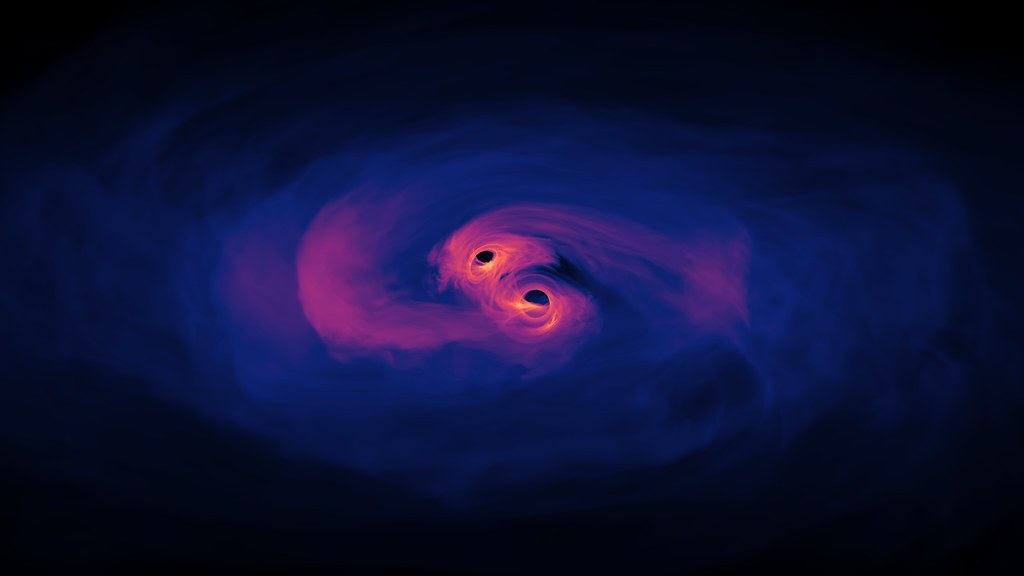
Supermassive black holes: The Real Threat to Galaxies
Supermassive black holes are now believed to potentially ‘kill’ galaxies by halting star formation. A recent study sheds light on this alarming discovery, highlighting the impact of these cosmic giants.
What Are Supermassive Black Holes?
Supermassive black holes are colossal entities found at the centers of galaxies, containing millions to billions of times the mass of the Sun. They are believed to form as a result of the gravitational collapse of massive gas clouds and the merger of smaller black holes. These enigmatic objects play a crucial role in the evolution of galaxies, influencing their formation and development.
The gravitational pull of supermassive black holes is so strong that it affects the motion of stars and gas in their vicinity. As materials spiral into these black holes, they emit intense radiation, which can drive powerful outflows of gas and dust. This process can ultimately lead to the suppression of star formation within the host galaxy.
Recent studies suggest that supermassive black holes may ‘kill’ galaxies by shutting down star formation, a phenomenon that can have long-lasting effects on the galaxy’s structure and evolution. The balance between black hole growth and star formation is crucial, as it determines a galaxy’s fate over cosmic timescales. Understanding supermassive black holes is essential for astronomers seeking to unravel the mysteries of the universe.
The Impact on Star Formation
Supermassive black holes play a critical role in the evolution of galaxies, particularly in how they influence star formation. Recent studies suggest that these massive entities can effectively “kill” galaxies by halting the birth of new stars. This phenomenon occurs when the black holes expel vast amounts of energy and radiation, creating powerful outflows that sweep away the gas and dust necessary for star formation.
When a supermassive black hole at the center of a galaxy grows too large, its gravitational pull and energetic emissions can lead to several consequences:
- Stellar Feedback: The energy emitted can heat surrounding gas, preventing it from cooling and collapsing to form new stars.
- Gas Removal: Outflows generated by the black hole can eject gas from the galaxy entirely, further depleting the raw materials needed for star creation.
- Galactic Evolution: The long-term impact of these processes can alter the structure and dynamics of galaxies, leading to a rapid decline in star formation rates.
Consequently, the presence of supermassive black holes is increasingly recognized as a significant factor in the life cycle of galaxies, shaping their development and longevity in the cosmic landscape.
New Study Findings
A recent study has revealed alarming insights into the behavior of supermassive black holes and their potential to “kill” galaxies. Researchers have found that these massive entities can significantly hinder star formation, leading to a drastic decline in a galaxy’s ability to produce new stars. The study analyzed various galaxies and their supermassive black holes, uncovering a pattern that highlights the detrimental effects these cosmic giants can have on their surroundings.
Key findings from the research include:
- Shutdown Mechanism: Supermassive black holes emit powerful jets and winds that can expel gas from their host galaxies, the primary ingredient for star formation.
- Galactic Evolution: The study suggests that as supermassive black holes grow, they evolve into a state where they can suppress star birth, effectively altering the galaxy’s life cycle.
- Long-term Implications: This suppression can lead to a barren galaxy, unable to sustain new stars, which could have far-reaching consequences for cosmic structure.
These findings shed light on the critical role of supermassive black holes in shaping the fate of galaxies and emphasize the need for further exploration into their influence on the universe.
Future of Galaxies at Risk
The future of galaxies is increasingly at risk due to the influence of supermassive black holes. These colossal entities, found at the centers of most large galaxies, play a critical role in their evolution. As research progresses, scientists are uncovering the profound ways in which supermassive black holes can stifle star formation and ultimately determine the fate of their host galaxies.
Recent findings indicate that when a supermassive black hole becomes active—often triggered by the accretion of surrounding matter—it can emit powerful jets and radiation. This activity can lead to:
- Suppression of gas inflow: The energy released can heat up the surrounding gas, preventing it from cooling and collapsing to form new stars.
- Feedback mechanisms: The intense radiation may expel gas from the galaxy, effectively removing the materials necessary for star formation.
- Alteration of galactic structure: The interaction between the black hole and its environment can reshape the dynamics and morphology of the galaxy.
This interplay suggests that supermassive black holes are more than mere cosmic curiosities; they are pivotal forces that may dictate the lifespans of galaxies, potentially leading to a future where many galaxies experience a decline in star production.
By NASA Goddard Photo and Video via Openverse